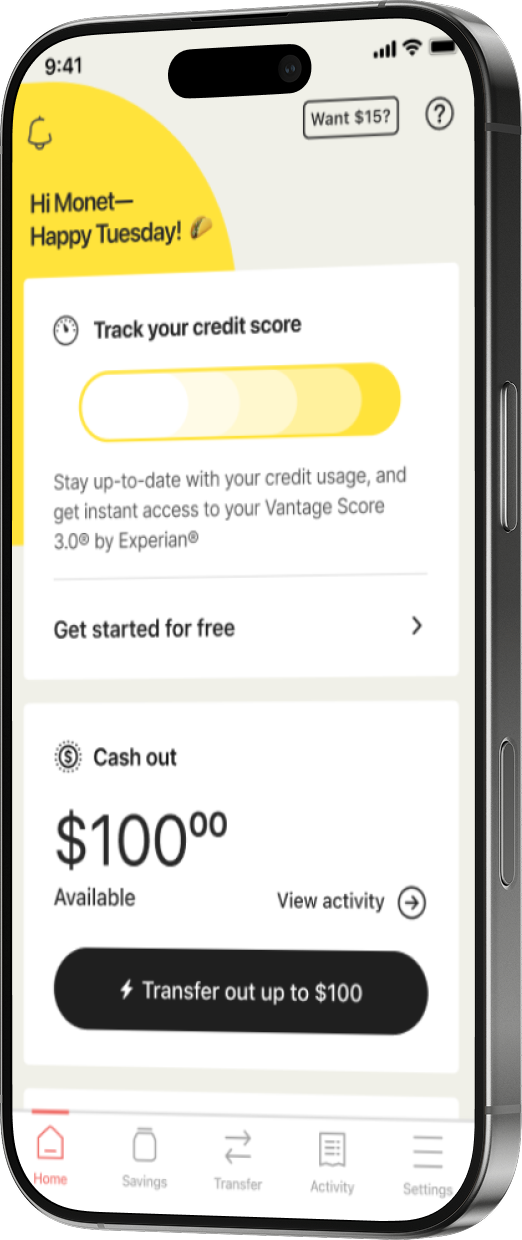






Monitoring credit1 on a regular basis can be helpful for users in identifying the key factors that are impacting scores, identify errors, and flagging suspicious activity.
This can help you identify budgeting options to further improve your credit. With Credit Monitoring you get access to your recent score (updated monthly), can visually track changes for your score over the last 12 months, and drill down into key elements feeding into your score.
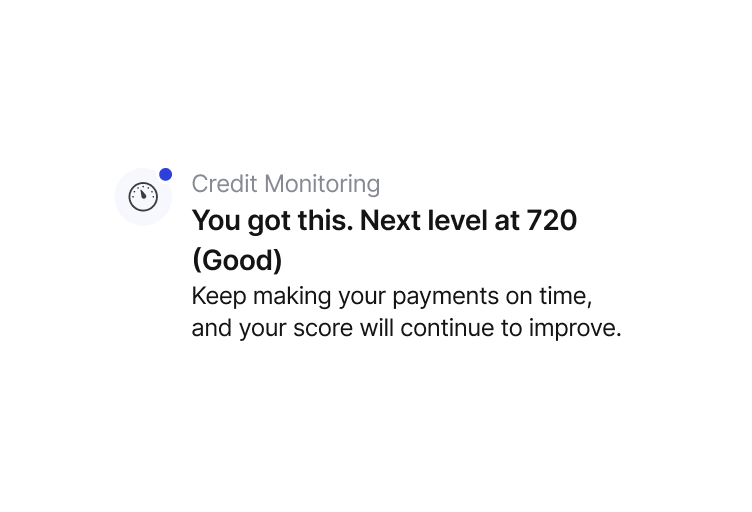
Finally, our Credit Monitoring1 alerts will notify you about important changes to your credit report (such as new hard inquiry, collection, bankruptcy, etc.) so you can take action on suspicious activity or be informed on changes to your credit file.
It’s important to remember that your most recent credit activity may not show up on your credit reports. Lenders and creditors usually report information to credit bureaus every month or so, so make sure any wrong information isn’t just out of date.
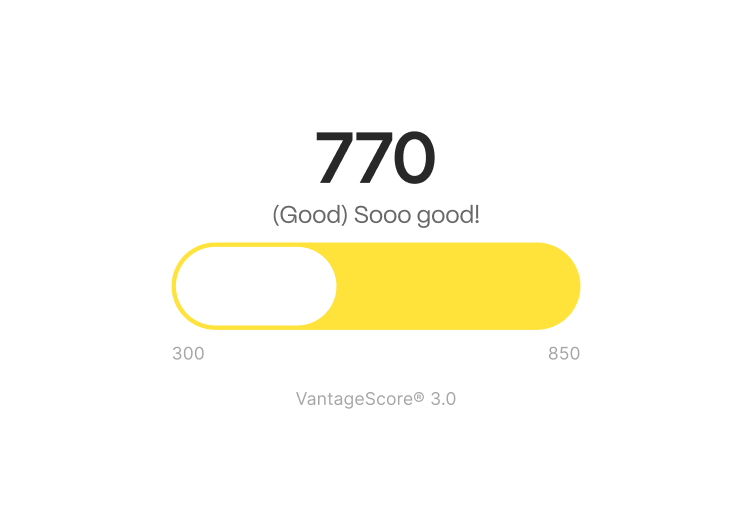
A credit score is based on a consumer’s credit history, which can include factors such as number of open accounts, total debt, repayment history, and other factors. Lenders use credit scores to evaluate the risk assigned to lend money to a consumer. A good credit score is 690 to 719 on the 300-850 scale commonly used for FICO scores and VantageScores.
VantageScore was developed by the three bureaus, Equifax, TransUnion and Experian to predict an individual's ability to repay borrowed money. EarnIn will present this VantageScore® 3.0 as part of the Credit Monitoring feature.
There are many nuances to a credit score, and a “good” score depends on what you’re looking to do. The VantageScore® 3.01 uses the following credit score categories.
Typically, a score of 660 and above will allow you to qualify for some loans. However, there are plenty of credit products for people with a score lower than 660. Head over to Experian’s website for more information on what credit score you might need.